A missing signature. A forgotten date. A mislabeled lock. These aren’t minor slips—they’re openings for catastrophic incidents. In industrial environments, where machinery stores lethal energy, a single oversight during maintenance can lead to amputation, electrocution, or death. The lockout tagout sign out sheet isn't paperwork—it’s a legal and operational lifeline. It documents who isolated energy, when, and how, ensuring no equipment restarts prematurely. More than a form, it's a shared responsibility, a communication tool, and a compliance anchor.
This article breaks down how to design, implement, and enforce a reliable sign out sheet system—because when lives depend on it, generic templates won’t cut it.
Why a Sign Out Sheet Is Non-Negotiable in LOTO
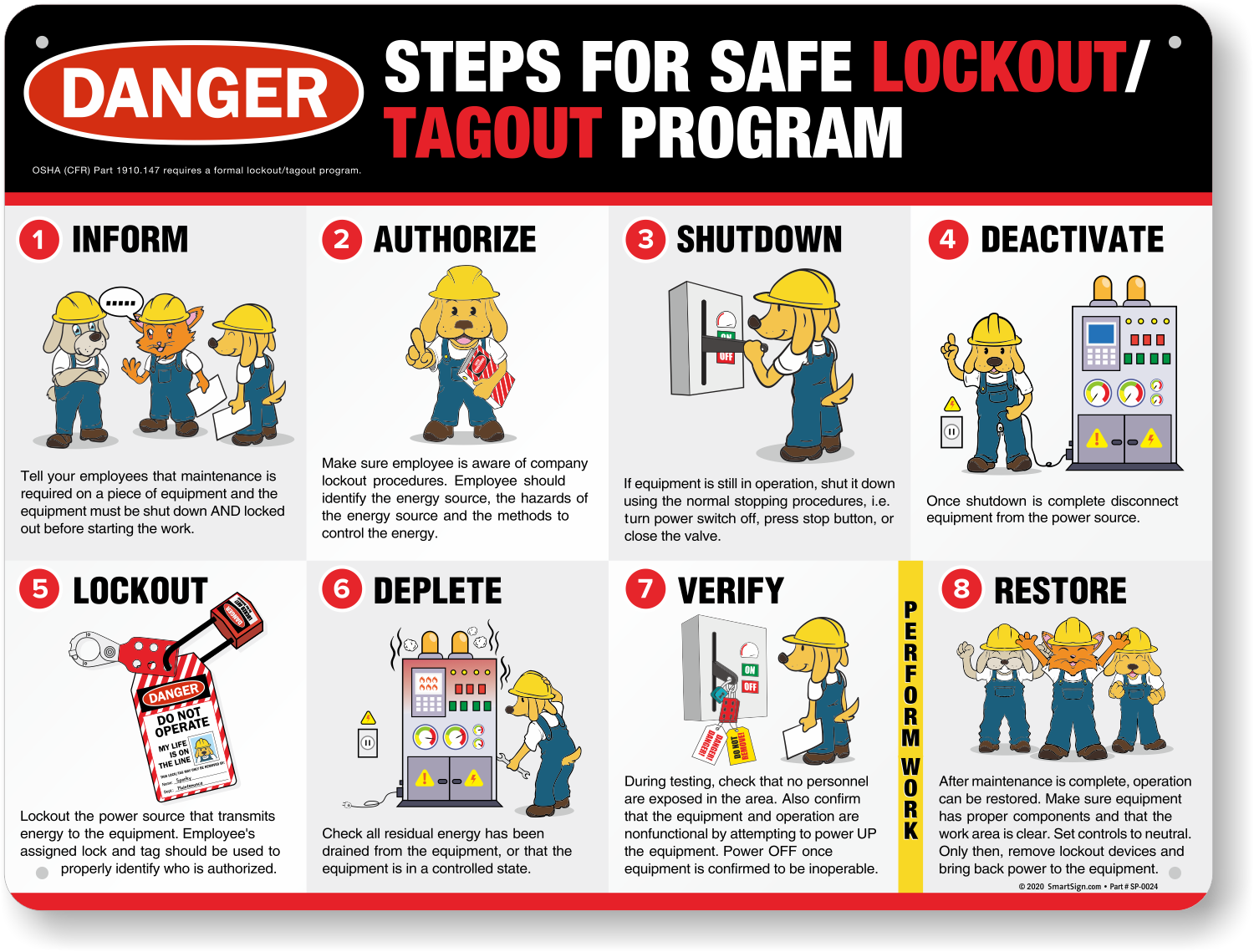
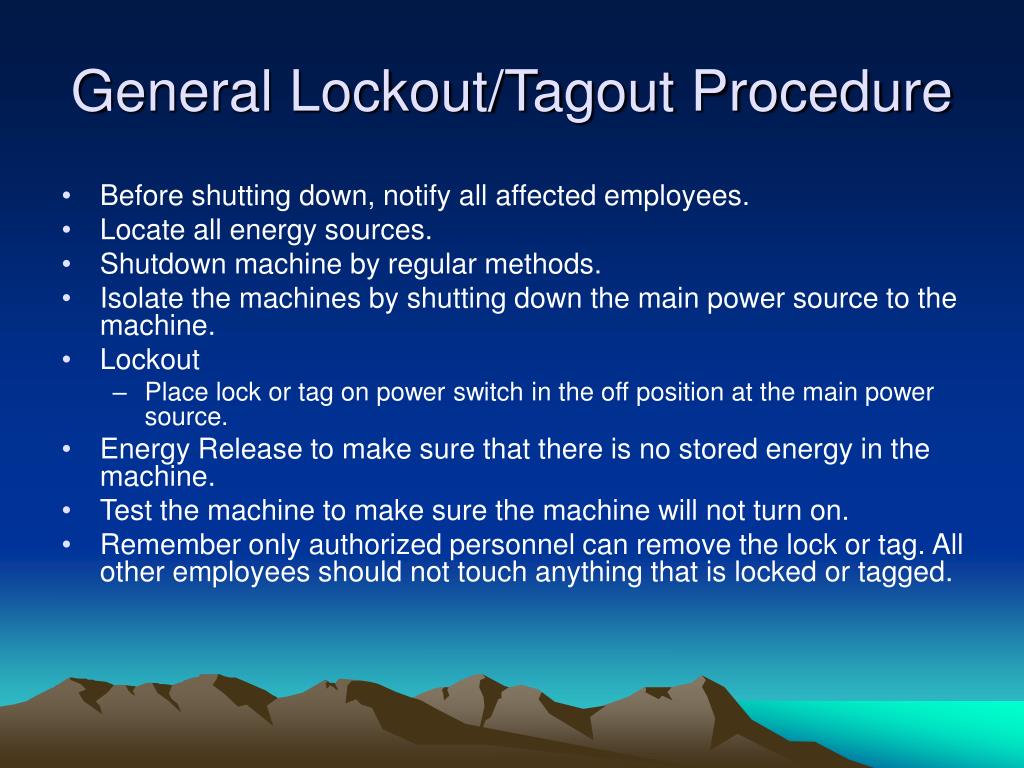
Lockout tagout (LOTO) procedures exist to neutralize hazardous energy during servicing. But without verification, coordination, and documentation, even the best plans fail. That’s where the sign out sheet enters: it formalizes accountability across teams.
OSHA’s 29 CFR 1910.147 requires employers to document energy control procedures, including employee training, periodic inspections, and a system for tracking lock application and removal. The sign out sheet fulfills that tracking function.
Consider this scenario: A maintenance crew in a food processing plant shuts down a conveyor system. Three technicians apply locks. One finishes early and removes his lock without updating the team. The shift supervisor, unaware, restarts the line. The second technician is still inside the machine guard.
This isn’t hypothetical. Real incidents like this have occurred—often due to poor communication and missing documentation. A properly used sign out sheet would have recorded each technician’s lock status, preventing unauthorized re-energization.
The sign out sheet does three critical things: - Verifies control: Confirms all energy sources are isolated before work begins. - Tracks personnel: Lists everyone involved and their lock status. - Prevents premature startup: Serves as a checklist before re-energizing.
Without it, LOTO isn’t just incomplete—it’s dangerously fragile.
What Should a LOTO Sign Out Sheet Include?
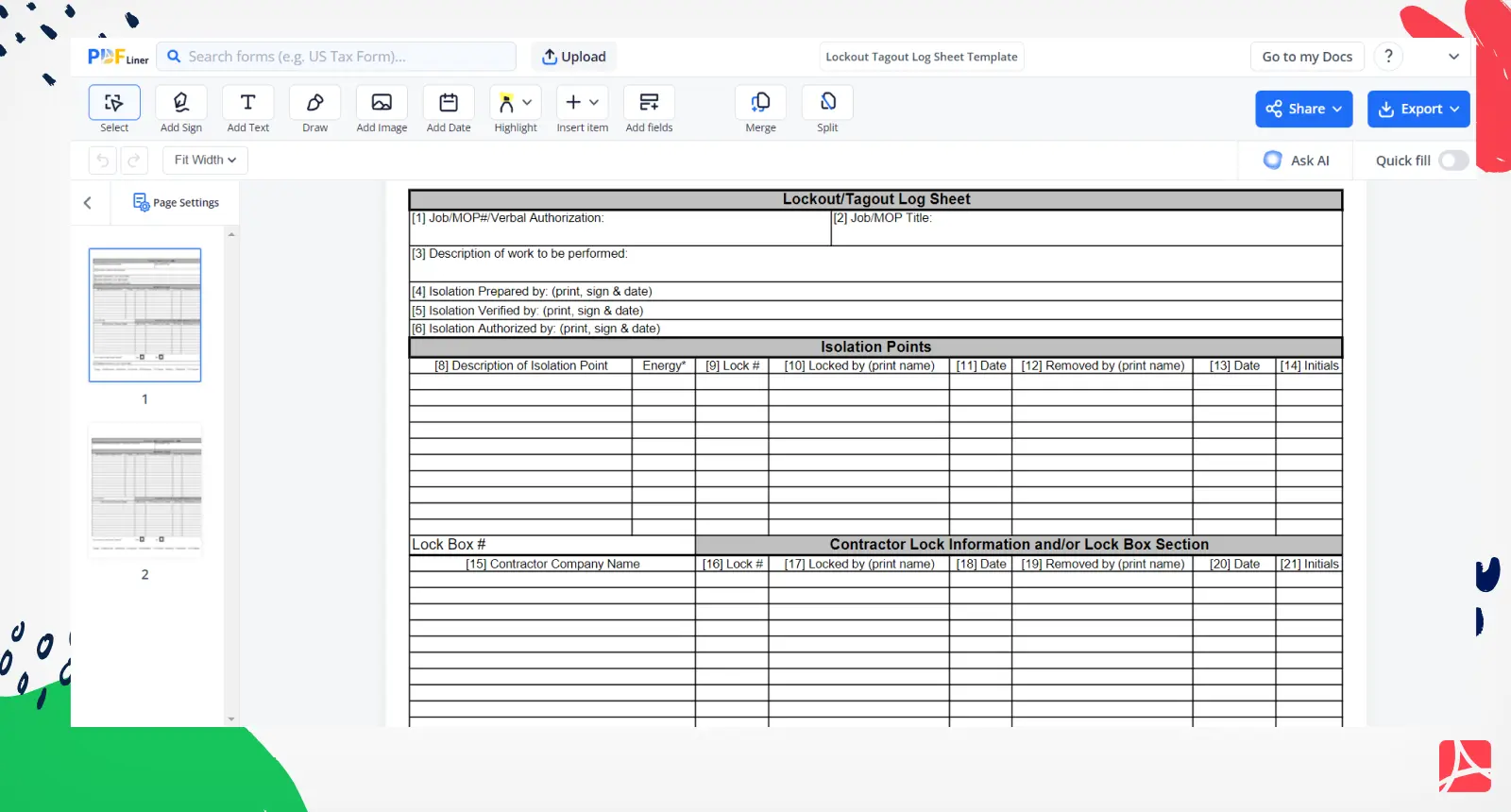
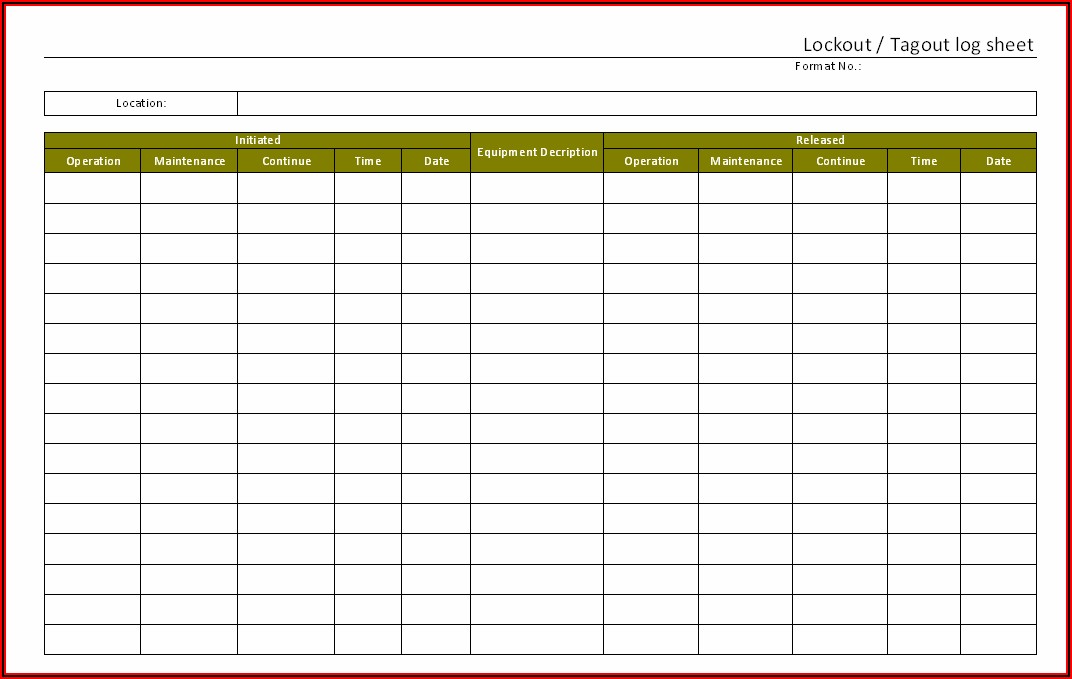
A robust sign out sheet isn’t a blank log. It must prompt users to record essential details, reducing the risk of omission. Based on OSHA guidelines and industry best practices, the following elements are non-negotiable:
Mandatory Fields
- Equipment name/location: Specific identifier (e.g., "Conveyor Line 4, South Wing").
- Date and shift: Ensures traceability.
- Purpose of lockout: Brief description (e.g., "Motor replacement").
- Primary authorized employee: The person initiating the lockout.
- List of all affected employees: Names, departments, and employee IDs.
- Lock application log: Columns for name, lock ID, time applied, energy source controlled.
- Lock removal log: Same fields, time removed, initials.
- Verification of zero energy: Signature confirming testing (e.g., "Tested with voltmeter").
- Final clearance signature: Authorizing re-energization.
Design Tips That Prevent Errors

- Use checkboxes, not blank lines, for critical actions (e.g., "All personnel accounted for – ☐").
- Color-code sections: red for lock application, green for release.
- Include visual cues: Icons for electrical, mechanical, pneumatic, or hydraulic energy.
- Make it durable: Laminated sheets or waterproof paper for harsh environments.
A common mistake? Using a single master sheet for multiple machines. Each piece of equipment should have its own sign out sheet—consolidated logs create confusion and compliance gaps.
Common Mistakes That Undermine LOTO Sign Out Sheets
Even with a well-designed form, human error and procedural gaps erode effectiveness. These mistakes are frequent—and preventable.
1. Incomplete Signatures Workers write initials instead of full names, or skip signatures entirely. This breaks accountability. Fix: Require full names and employee IDs. Audit sheets weekly.
2. Backdating or Pre-Filling Technicians fill out forms in advance “to save time.” This invalidates the process. Fix: Enforce real-time completion. Supervisors should verify timestamps against work logs.
3. Shared Locks or Keys A single lock used by multiple people, or master keys accessible to unauthorized staff. Fix: One person, one lock, one key policy. Keys remain with the individual.
4. No Verification Step Assuming isolation without testing. Fix: Add a line: “Energy source verified de-energized: ☐ Yes, ☐ No” with space for test method.
5. Poor Storage and Access Sheets left in offices or lost during shift changes. Fix: Use lockout stations with clipboards or digital access at machine points.
These aren’t just compliance issues—they’re failure points in a safety system. Each mistake increases the risk of a near-miss or worse.
Digital vs. Paper Sign Out Systems: Pros and Cons
While paper forms are still widespread, digital solutions are gaining ground. Here’s how they compare in real-world use:
| Feature | Paper Systems | Digital Systems |
|---|---|---|
| Real-time updates | No—requires manual syncing | Yes—live status across devices |
| Audit trail | Limited—prone to loss or damage | Full history with timestamps |
| Accessibility | Physical access needed | Cloud-based, mobile accessible |
| Error prevention | Prone to omissions | Mandatory fields, alerts |
| OSHA compliance | Possible, if well-managed | Easier to prove compliance |
| Cost | Low upfront | Higher initial investment |
Digital platforms like FacilityBot, EHS Insight, LockOutTagOut.com’s eLOTO, Cority, and Intelex offer smart sign out modules that integrate with lock inventories, training records, and audit logs.
Choose paper only if: - Workforce has low digital literacy. - Machines are isolated and low-risk. - Budget constraints prevent software adoption.
Otherwise, digital systems reduce errors, improve response time, and simplify reporting. A mid-sized manufacturing plant using a digital LOTO system reported a 68% drop in compliance violations within six months—proof that technology strengthens safety culture.
Real-World Use Cases: How Sign Out Sheets Prevent Disasters
Case 1: Automotive Assembly Line At a Detroit plant, a technician was replacing a hydraulic press valve. Three locks were applied. Midway, a supervisor called for line restart due to production pressure. The sign out sheet showed two locks still active. Restart halted. Investigation revealed one worker had stepped away for medical aid—his lock still on, but uncommunicated. The sheet prevented a potential fatality.
Case 2: Chemical Processing Facility During a routine pump repair, a contractor applied a lock but didn’t sign the sheet. The primary technician assumed isolation was complete. Before energizing, the supervisor reviewed the log—missing signature flagged. The contractor was located and properly onboarded. Incident avoided.
Case 3: Hospital HVAC Maintenance A facility manager used a generic maintenance log instead of a LOTO sign out sheet. A technician cleared a clogged fan but didn’t update the log. Another staff member restarted the system, causing blade damage and injury. OSHA fined the hospital for inadequate energy control documentation.
These cases show that the sign out sheet isn’t bureaucratic—it’s a real-time safety net.
How to Train Teams on Proper Sign Out Sheet Use
Training must go beyond “fill out the form.” Workers need context, repetition, and consequences.
Effective Training Components
- Hands-on drills: Simulate lockout scenarios with timed sign out exercises.
- Role-playing: One employee acts as technician, another as supervisor verifying release.
- Error injection: Intentionally leave a field blank—ask trainees to spot it.
- Refresher sessions: Quarterly reviews with real audit findings.
Track understanding with a simple checklist: - Can the employee list all required fields? - Do they know who authorizes re-energization? - Can they explain the risk of skipping verification?
Supervisors should conduct random audits—reviewing 10% of completed sheets weekly. Feedback should be immediate and constructive.
Integrating Sign Out Sheets into Your Safety Management System
The sign out sheet shouldn’t live in isolation. It must connect to: - LOTO procedures: Each machine’s SOP should reference the correct form. - Training records: Proof that users were trained on the form. - Periodic inspections: OSHA mandates annual audits—use past sign out sheets as audit evidence. - Incident investigations: Review logs after near-misses to find procedural gaps.
For larger organizations, link the sign out process to a CMMS (Computerized Maintenance Management System). When a work order is created, the system auto-generates a digital sign out sheet, assigns locks, and notifies supervisors upon completion.
Final Thoughts: Make the Sign Out Sheet a Culture, Not a Chore
A lockout tagout sign out sheet only works if people respect it. That means leadership must treat it as sacred—not another box to tick. Post it visibly. Audit it ruthlessly. Celebrate compliance.
Design your sheet for clarity, not compliance theater. Test it under real conditions. Fix what fails.
And remember: no form prevents accidents. People do. But the right form empowers people to act safely, every time.
Start today. Pull your current sign out sheet. Walk through a maintenance scenario with your team. Find the gaps. Fix them. Lives depend on it.
Frequently Asked Questions
What is the purpose of a lockout tagout sign out sheet? It documents who applied and removed energy isolations, ensuring all personnel are accounted for before re-energizing equipment.
Who is responsible for filling out the sign out sheet? The authorized employee leading the maintenance task initiates and manages the sheet, with input from all affected workers.
Can multiple people use the same lock on a sign out sheet? No. Each individual must apply their own lock and tag, with their name and details recorded separately.
How long should completed sign out sheets be kept? OSHA requires documentation of periodic inspections for at least one year, but retaining sheets for 3–5 years is best practice.
Are digital sign out sheets OSHA-compliant? Yes, as long as they meet documentation requirements, provide secure access, and maintain an auditable trail.
What happens if a worker forgets to sign the sheet? The lockout remains active until verified. Never assume a missing signature means clearance—treat it as an unresolved hazard.
Can a sign out sheet replace a lock or tag? No. The sheet supports the physical lockout—it never replaces it. Energy isolation must always be mechanical.
FAQ
What should you look for in Lockout Tagout Sign Out Sheet Best Practices and Uses? Focus on relevance, practical value, and how well the solution matches real user intent.
Is Lockout Tagout Sign Out Sheet Best Practices and Uses suitable for beginners? That depends on the workflow, but a clear step-by-step approach usually makes it easier to start.
How do you compare options around Lockout Tagout Sign Out Sheet Best Practices and Uses? Compare features, trust signals, limitations, pricing, and ease of implementation.
What mistakes should you avoid? Avoid generic choices, weak validation, and decisions based only on marketing claims.
What is the next best step? Shortlist the most relevant options, validate them quickly, and refine from real-world results.