Every year, hundreds of workers suffer serious injuries—or worse—because machinery was accidentally energized during maintenance. The root cause? A missing or improperly executed lockout tagout procedure. This isn’t just about following rules; it’s about preventing life-altering accidents when servicing equipment.
Lockout tagout (LOTO) is a systematic safety process used to isolate hazardous energy sources and prevent the unexpected startup of machines or equipment. It’s a non-negotiable protocol in industries ranging from manufacturing to utilities, and its correct implementation can mean the difference between a routine repair and a catastrophic incident.
This guide breaks down the real-world mechanics of a general lockout tagout procedure—what it is, how it works, common pitfalls, and how to get it right every time.
What Is a Lockout Tagout Procedure?
At its core, a lockout tagout procedure is a formalized method to ensure that machines are completely shut down and cannot be restarted until maintenance or servicing is complete. The “lockout” part involves physically locking energy-isolating devices (like circuit breakers or valve locks), while “tagout” refers to attaching warning tags that communicate the status and reason for the lock.
These procedures are designed to protect workers from:
- Electrical energy
- Mechanical motion
- Hydraulic or pneumatic pressure
- Chemical exposure
- Thermal hazards
For example, consider a technician tasked with clearing a jam in a conveyor system. Without LOTO, someone could restart the conveyor remotely, leading to severe crushing injuries. With proper lockout tagout, the conveyor’s power source is locked and tagged, making it physically impossible to energize until the lock is removed by the authorized worker.
Why Standardization Matters in LOTO
One of the most common failures in lockout tagout isn’t ignorance—it’s inconsistency. Different shifts, departments, or contractors applying their own versions of “safe shutdown” leads to confusion and risk.
A general lockout tagout procedure standardizes the steps across an entire organization. This ensures that:
- All employees follow the same verified sequence
- Energy sources are consistently identified and controlled
- Tags and locks are used uniformly
- Compliance with OSHA 1910.147 is demonstrable during audits
A standardized approach also simplifies training. New employees don’t have to learn multiple methods; they learn one reliable system that applies to every applicable machine.
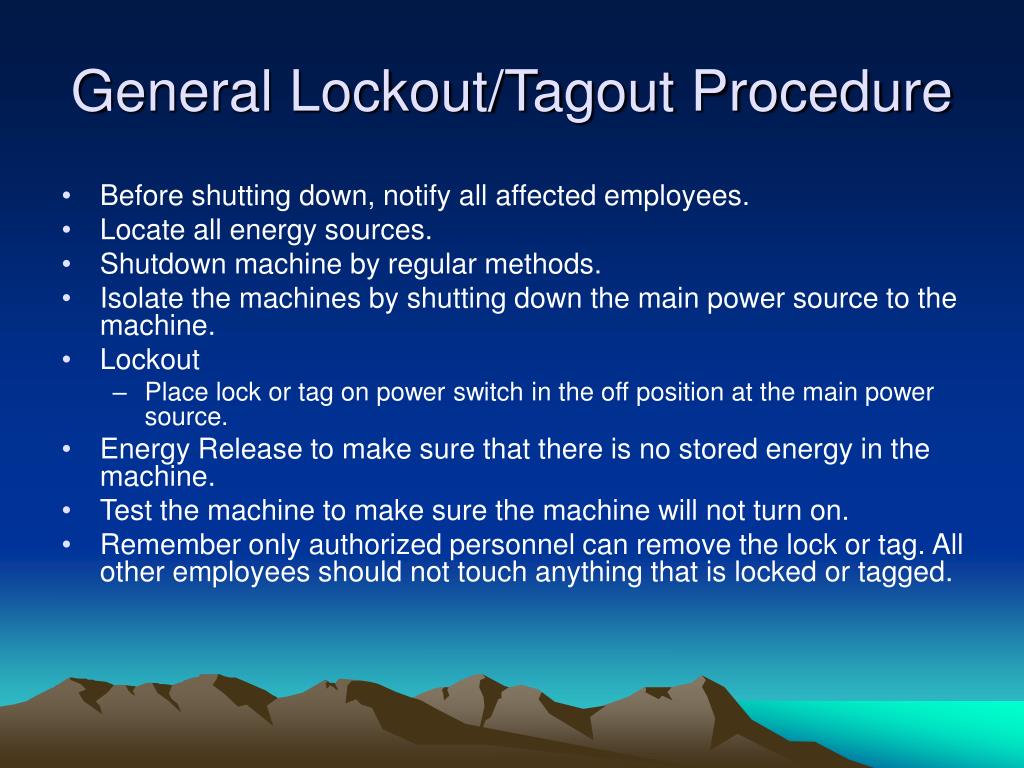
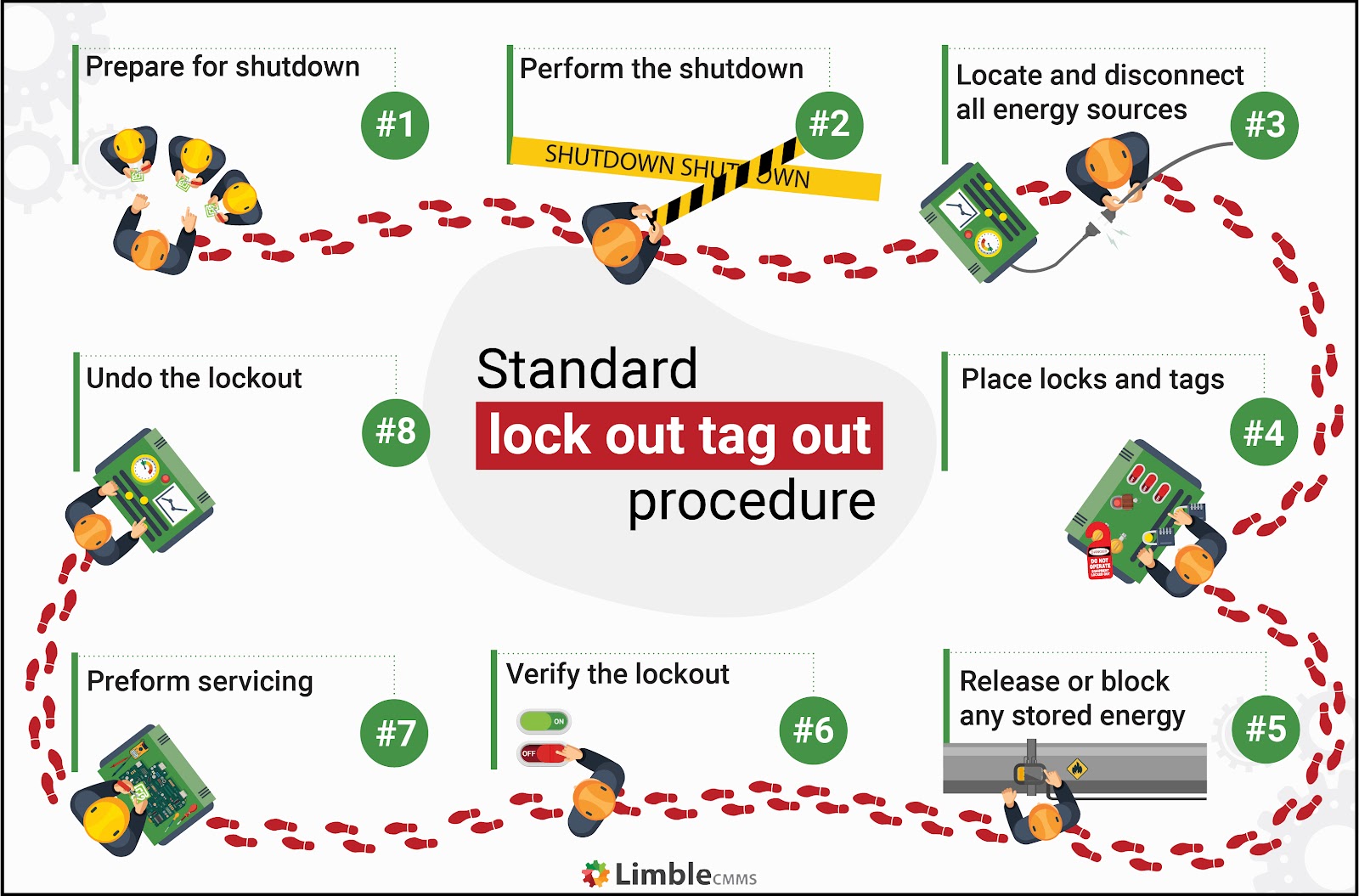
The 7-Step General Lockout Tagout Procedure
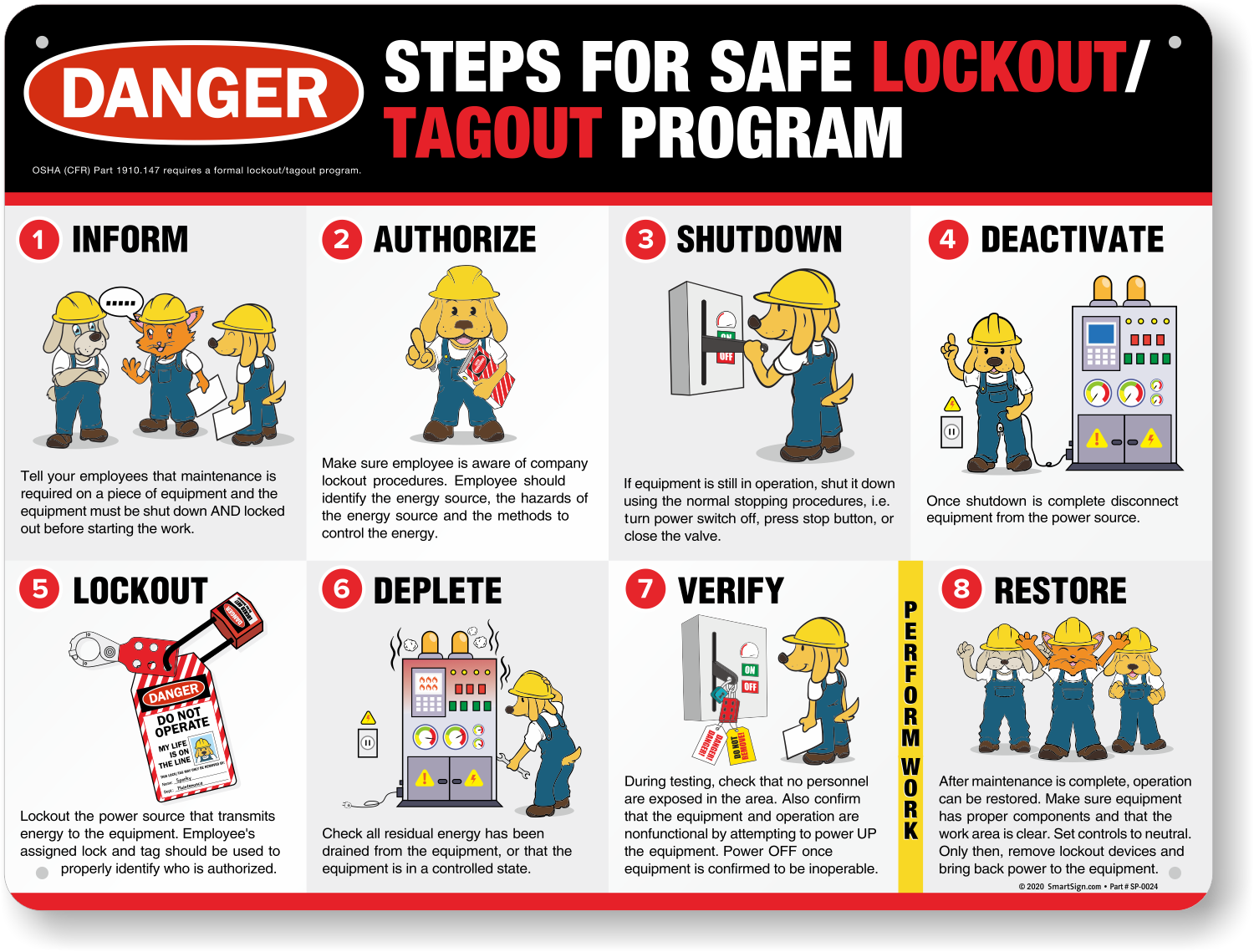
While specific equipment may require unique variations, a general LOTO process follows this seven-step framework:
1. Preparation Before beginning, the authorized employee must identify:
- The type and magnitude of energy involved
- The energy-isolating devices (disconnects, valves, etc.)
- The necessary lockout devices (hasps, locks, tags)

Failure here leads to incomplete isolation. For instance, overlooking a secondary hydraulic line could leave residual pressure in the system.
2. Notification Inform all affected employees that maintenance is about to begin and equipment will be shut down. This prevents panic or unauthorized attempts to restart machinery.
3. Equipment Shutdown Use normal stopping procedures (e.g., pressing the stop button) to shut down the machine. Never assume stopping at the control panel disables all energy.
4. Isolation of Energy Sources Physically disconnect or block all energy sources. This includes: - Turning off circuit breakers - Closing and locking isolation valves - Blocking moving parts mechanically
A common mistake: failing to disconnect pneumatic lines. Even after power is off, pressurized air can cause sudden movement.
5. Application of Locks and Tags Each authorized worker applies their own personal lock and tag. This is critical—group locks should never replace individual accountability.
Tags must include: - Name of the person who applied the lock - Date and time - Reason for lockout
Using generic tags like “Do Not Operate” without personal identification removes accountability.
6. Release of Stored Energy
Before work begins, all residual energy must be safely dissipated: - Bleed hydraulic lines - Discharge capacitors - Allow rotating parts to stop completely - Block gravity-powered components
A crushing injury occurred at a paper mill when a roller was locked out electrically, but stored mechanical energy wasn’t released. The roller moved unexpectedly when a technician removed a guard.
7. Verification of Isolation The final and most critical step: attempt to start the machine using normal controls. Since all energy is isolated, it should not start. This positive verification confirms the system is truly de-energized.
If the machine does start—or even hums—the procedure failed. Start over.
Common Mistakes That Undermine LOTO Safety
Even organizations with formal procedures often fall into predictable traps.
Using One Lock for Multiple Workers When three technicians work on a machine, each must apply their own lock. Removing one lock doesn’t release the others—work continues until all individuals remove their locks. A shared lock removes this safeguard.
Skipping Stored Energy Release
Many workers focus only on primary energy sources. But springs, capacitors, and elevated loads retain energy long after power is off.
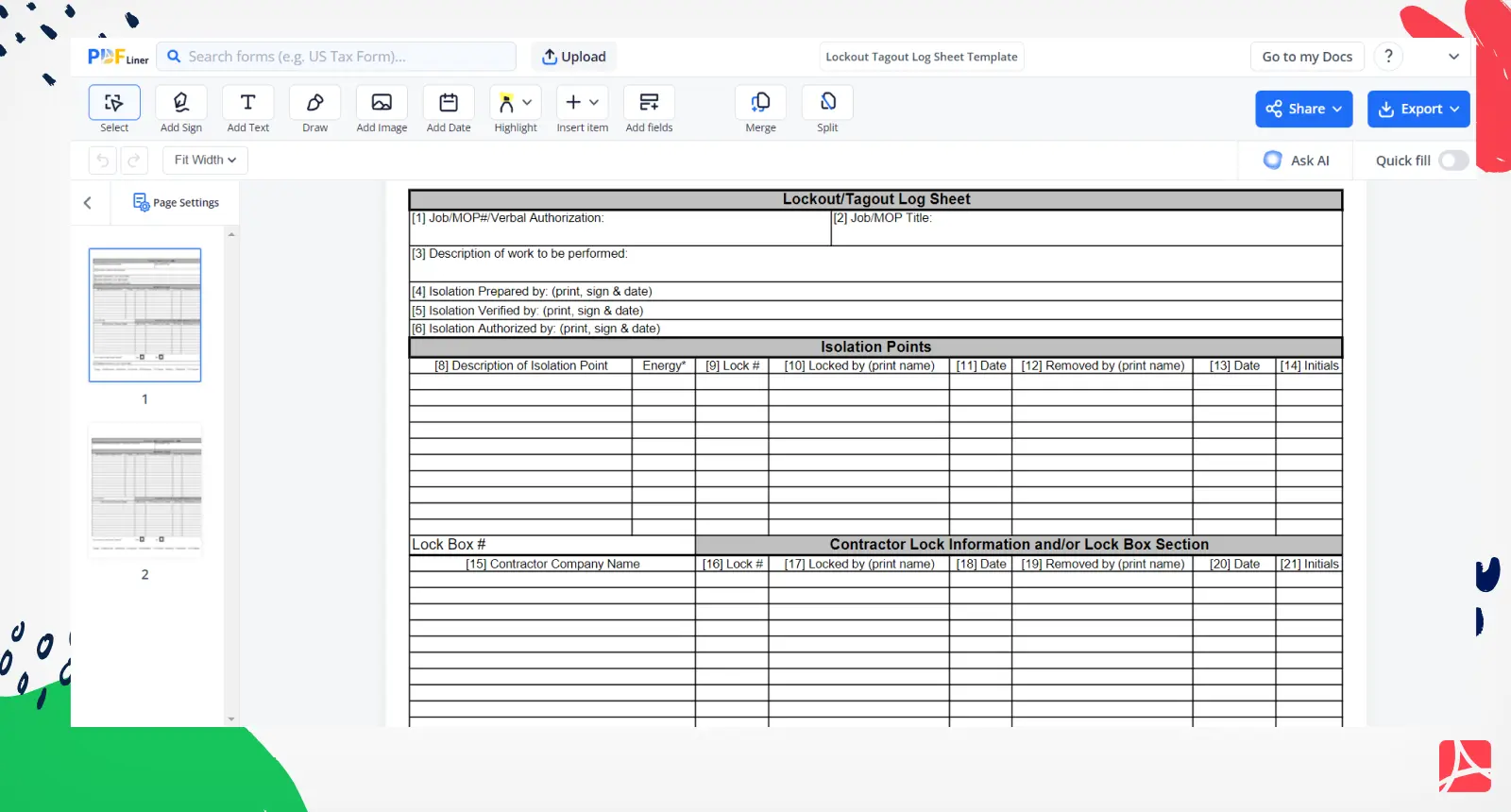
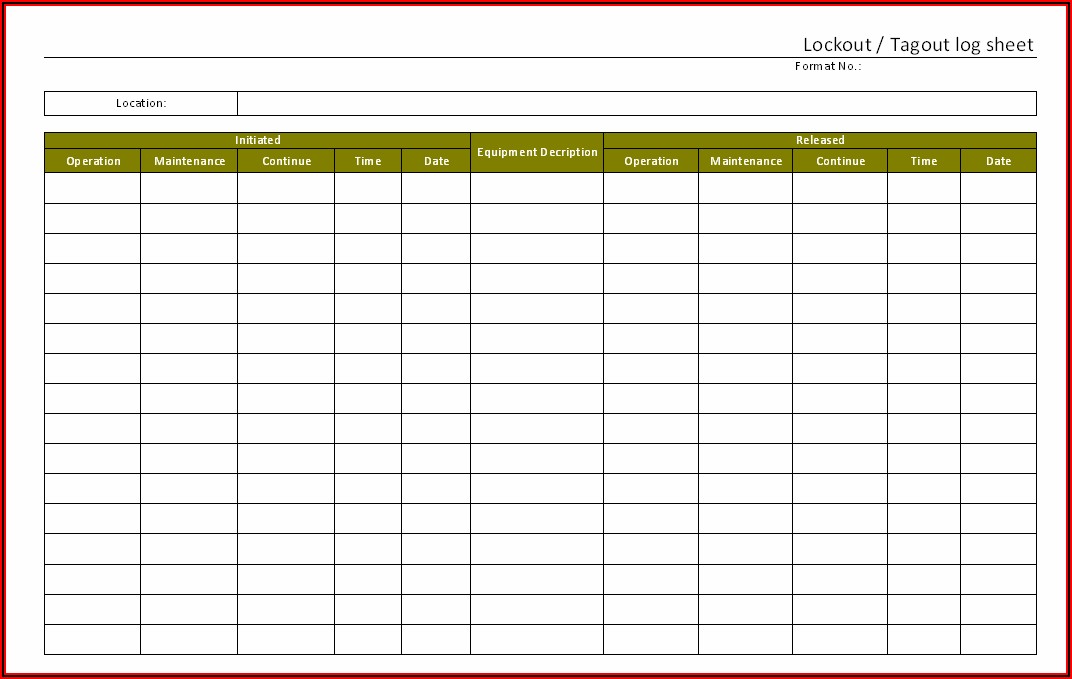
Incomplete Documentation If a LOTO procedure isn’t written down, it’s not standardized. Verbal instructions vary and degrade over time.
Tag Removal by Unauthorized Personnel Tags are not suggestions. Only the person who applied the lock should remove it—unless exceptional circumstances (like employee absence) require a formal, documented removal process.
Over-Reliance on Control Circuit Isolation Stopping a machine via the control panel isn’t sufficient. True isolation must occur at the primary energy source.
Real-World Use Cases of LOTO Procedures
Case 1: Conveyor System Maintenance A packaging plant schedules weekly cleaning of a conveyor. The technician: 1. Shuts down the line and notifies the supervisor 2. Locks out the main motor disconnect with a personal lock 3. Tags the lock with name, date, and “Cleaning in progress” 4. Releases tension on belts and blocks rollers 5. Tests by pressing the start button—no response 6. Performs cleaning 7. Removes lock only after confirming area is clear
Case 2: Boiler Servicing A facility engineer services a steam boiler. Steps include: - Isolating fuel supply and electrical feed - Locking both with personal devices - Tagging with hazard warnings - Draining residual steam and water - Verifying pressure gauges read zero - Confirming no startup is possible
Without isolating both fuel and electrical lines, a control signal could ignite gas—even if the main power is off.
Enhancing LOTO Compliance with the Right Tools
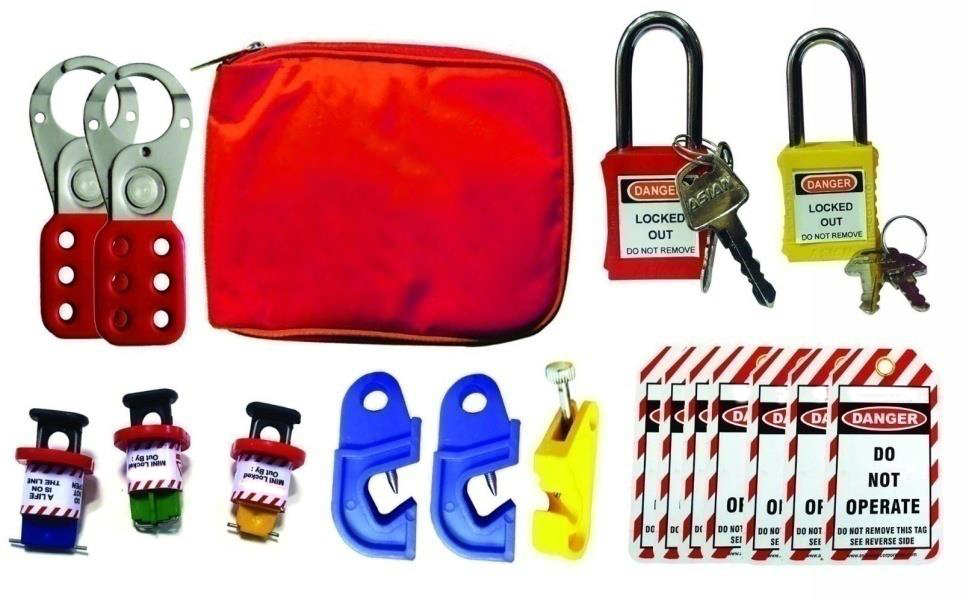
While the procedure is manual, the right tools improve consistency and accountability.
| Tool | Purpose | Real-World Benefit |
|---|---|---|
| Personal Lockout Hasps | Allows multiple locks on one isolation point | Ensures team accountability |
| Valve Lockouts | Secures isolation valves in closed position | Prevents accidental reopening |
| Circuit Breaker Locks | Keeps breakers in OFF position | Stops electrical re-energizing |
| Tagout Tags (Durable) | Weather-resistant warning labels | Long-term visibility in harsh environments |
| Lockout Stations | Centralized storage for locks, tags, and hasps | Reduces search time and loss |
Using standardized kits ensures that every worker has access to the right equipment—no improvisation.
Training and Auditing: The Backbone of LOTO Success
A procedure is only as strong as the people executing it.
- Initial training must cover energy hazards, lockout steps, and the importance of personal accountability.
- Refresher training should occur annually or after incidents.
- Periodic audits (at least yearly) verify that procedures are followed correctly.
During an audit at an automotive plant, it was discovered that 30% of lockout attempts missed stored energy checks. This led to retraining and the addition of a checklist at each workstation.
Audits should involve: - Observing actual lockout procedures - Reviewing logbooks or digital records - Interviewing employees on protocol details
Closing: Make LOTO a Culture, Not a Checklist
A general lockout tagout procedure isn’t just a compliance task—it’s a commitment to human safety. When done right, it eliminates preventable tragedies. When done poorly, it creates a false sense of security.
Implement standardized procedures. Train rigorously. Audit consistently. Empower every worker to stop work if LOTO isn’t followed.
The next life saved could be your own.
FAQ
What’s the difference between lockout and tagout? Lockout uses physical locks to prevent energy restoration; tagout uses warning tags. Lockout is preferred, but tagout can be used if it provides equivalent protection.
Who is responsible for applying the lock? Each authorized employee working on the equipment must apply their own personal lock and tag.
Can someone else remove my lock? Only under exceptional circumstances, such as medical emergency or employee absence, and only through a formal, documented removal process.
Does LOTO apply to corded equipment? Yes. For portable tools or equipment, the plug can be locked out using a plug lockout device.
What types of energy require LOTO? Electrical, mechanical, hydraulic, pneumatic, chemical, thermal, and gravitational energy—all must be controlled.
Is LOTO required for minor maintenance? Minor tasks like jam clearing or routine lubrication may be exempt if they meet specific criteria under OSHA’s “minor servicing exception,” but risk assessment is essential.
How often should LOTO procedures be reviewed? At minimum, annually or whenever equipment changes, new hazards emerge, or an incident occurs.